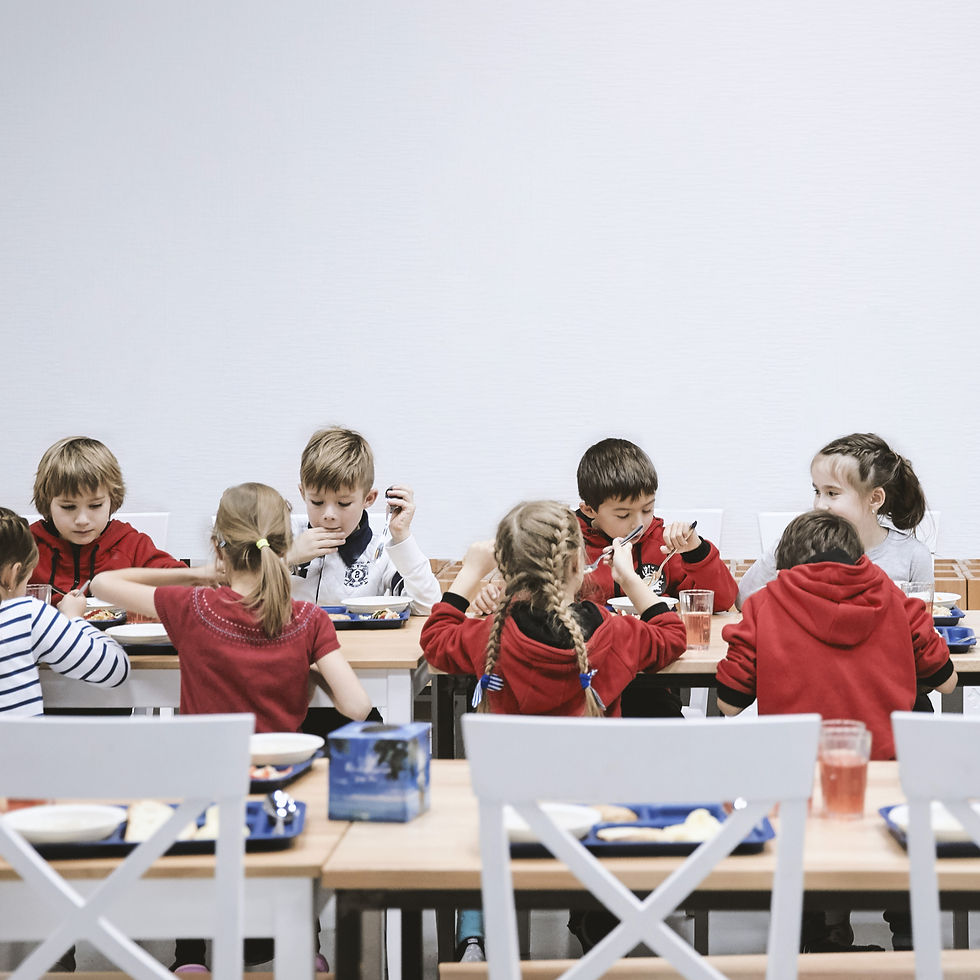
How do we get kids to enjoy eating vegetables?

By Sheryl Allen, MS, PhD, RD - Founder of Nudge to Nourish
We’re told that if we just had more discipline, more education, or a stronger "will," we would choose the lentils over the chips or the salad over the processed snacks.
The challenge isn't that people don't want to be healthy. The challenge is that our food environments are rigged against us. This is true at the supermarket and it’s true in our schools.

The first half of the battle is getting nourishing offerings on the menu, if they aren’t already.
Once those plant-powered meals are on the line, a new challenge begins: How do we empower a student to choose the lentil chili, eat it, and enjoy it? How do we make sure that juicy pear actually gets eaten instead of ending up in the bin? And how do we help kids fall in love with eating fruits and vegetables?
From Corporate Campuses to School Cafeterias
Before I began working with schools, I spent nearly a decade designing dining experiences for large, global workplaces. My work has spanned 60 countries, impacting hundreds of thousands of employees daily. What I’ve learned is that even for the world’s most driven professionals, the 'healthy choice' isn't always the easiest one to make.
I saw firsthand how environmental cues changed what people put on their plates. I realized that if these strategies could influence adults, they could be life-changing for children, whose palettes are beginning to take shape. I founded Nudge to Nourish on the belief that everyone should have access to the research and strategies needed to make healthy eating simple - corporate employees to kindergarteners. By bringing these evidence-based strategies into K-12, we can help children fall in love with foods that are nourishing for both people and the planet.

Small Shifts, Big Impact: 3 Nudges for Every Cafeteria
Our strategy is to start with what we know to be true: kids crave delicious food, kids will do easy things, and kids come back to fun experiences. On the “backend”, this means we need to make nourishing food convenient, appealing, and engaging. You don’t need a massive budget to change how students perceive plant-forward food. Sometimes, the most effective tools are simply creativity and conversation.
Here are some examples of how we can bring nudging to life in schools:
Think Flavor-First: Words matter. Research shows that kids (and adults) are more likely to choose vegetables when they are described using sensory, indulgent language.
The Power of the “3-Second Interaction”: Cafeteria staff are the original influencers. Even in a fast-moving line, a three-second positive nudge shifts a student’s mindset. A quick, "That bean chili is my favorite today, it’s delicious!" moves the meal from a "transaction" to a "recommendation."
Prime Real Estate: By placing colorful, plant-powered dishes in highly visible locations at the beginning of the line—when students are hungriest—we can significantly increase selection.
A New Blueprint for Food Systems
These environmental tweaks may seem small. But if we influence two meals a day for 12 years? That’s a massive part of a child’s entire life, and will shape their food habits for all of adulthood. That is the power of nudging. It’s quiet. It’s effective. And it respects individual choice by making the "right" choice the easiest one to make.
My mission is to prove that we can uplift community health without relying on the fragile resource of willpower. If we want to improve the health of both people and the planet, we have to design systems that work with our psychology, not against it. Only then can we best support students in building a lifelong relationship with food that is both nourishing and sustainable.
Q&A
Q: Does this mean schools are “tricking” kids into eating vegetables?
A: No, nudging isn’t about manipulation. It’s about removing friction and making nourishing choices easier to notice, easier to choose, and more enjoyable. Kids still choose what they want and eat what looks good to them.
Q: What are kid-friendly names that make vegetables sound delicious?
A: Think fun, flavor-first, and sensory - names that spark curiosity and paint a picture that kids can almost taste, see, or smell, like “crunchy carrot coins” or “sweet corn confetti”. When veggie names create a vivid image and engage the senses (crunchy, cheesy, warm, sweet), kids are far more likely to try (and love!) them.
Q: Do taste tests help picky eaters try new vegetables at school?
A. Yes! When kids can sample a small bite in a low-pressure and fun setting, it reduces fear of the unknown and builds familiarity. Pairing taste tests with descriptive names, appealing presentation, and a chance to vote or give feedback makes kids more curious, and much more likely to choose that veggie later on the line.
Q: We don’t have a budget for new menus or big redesigns. Can nudging still work?
A: Absolutely. Many of the highest-impact nudges are low-cost or no-cost: better placement, more appealing names, small moments of encouragement from staff, and simple presentation upgrades. You don’t need a new kitchen to change how food is experienced.
Q: Why is dietary fiber important for kids and which school foods have it?
Dietary fiber matters for kids because it supports digestion and a healthy gut, steadies energy and blood sugar, and helps them feel full and satisfied so they can focus and learn.
Fiber-rich school foods include fruits (apples, pears, berries), veggies (carrots, broccoli, beans), whole grains (oatmeal, whole-wheat bread, brown rice), and legumes (lentils, black beans, chickpeas). Making these the easy, tasty choice helps kids get the fiber their bodies need.
Want to help make fruits and veggies the easiest choice at your local school? Visit nudgetonourish.com/schools.